
When is a cheap paintbrush TOO cheap?
Date: 1/22/2023
I never thought it possible, but it’s happened. I love visiting hardware stores more than stationery shops.
These days, the hardware store sells everything just shy of leotards with matching leg-warmers, so it’s hardly a surprise to stumble upon art and craft supplies too.
Which is how I almost came to buy my weight in mosaic tiles not long ago, saved only by a dim recollection that I prefer painting and have never mosaic-ed in my life.
Instead, I purchased a trio of Renoir paintbrushes. I convinced myself that at $4.20 each, I could afford to buy them three times over, and still not have exceeded the price of an art-store brush. (Besides, they’re Renoirs: They must be amazing.)
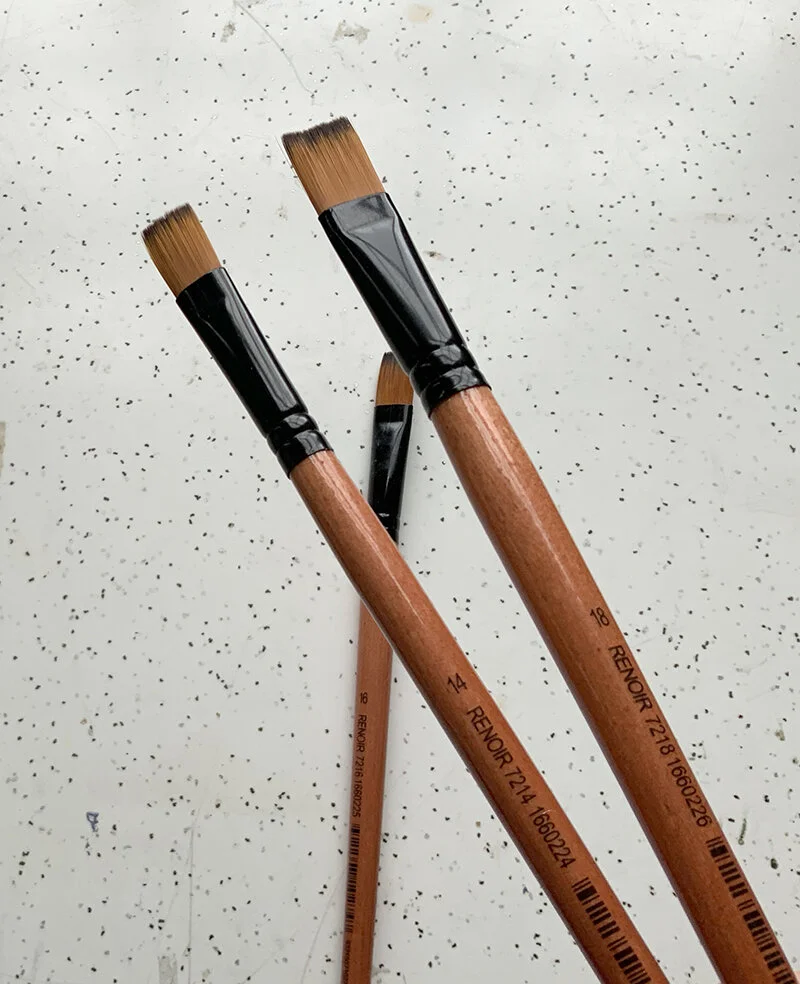
Paint brushes bought from the art & craft section of my hardware store
My usual go-to brush from the art store these days is the NEEF Taklon. A size 16 brush costs about $15 AUD.
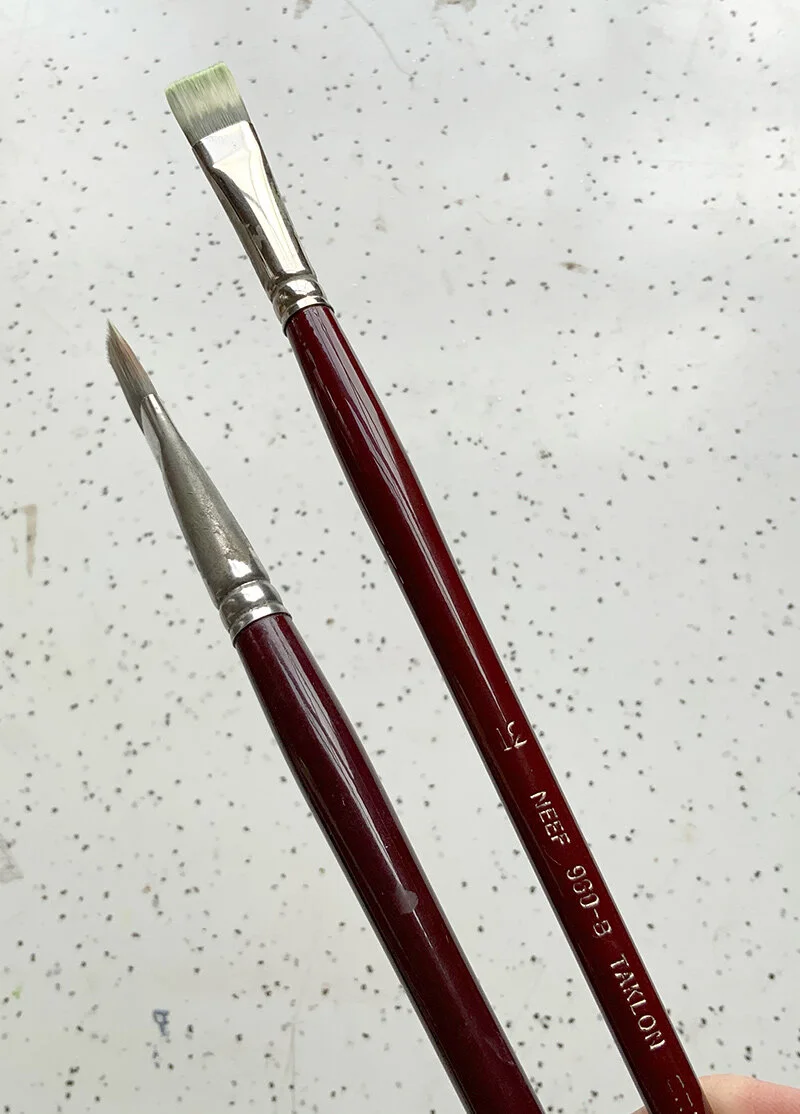
The NEEF Taklon soft synthetic brights I usually paint with.
They are not billed as top-of-the-range, and are possibly recommended more for acrylics than oils, but I prefer their softer bristles to other stiff synthetics, and they are considerably more affordable than Hog Bristle brushes, which I have also found too rigid when painting.
At the current rate I am painting, one of these brushes typically holds its own for about six weeks before I start wrinkling my nose at it and sighing inwardly.
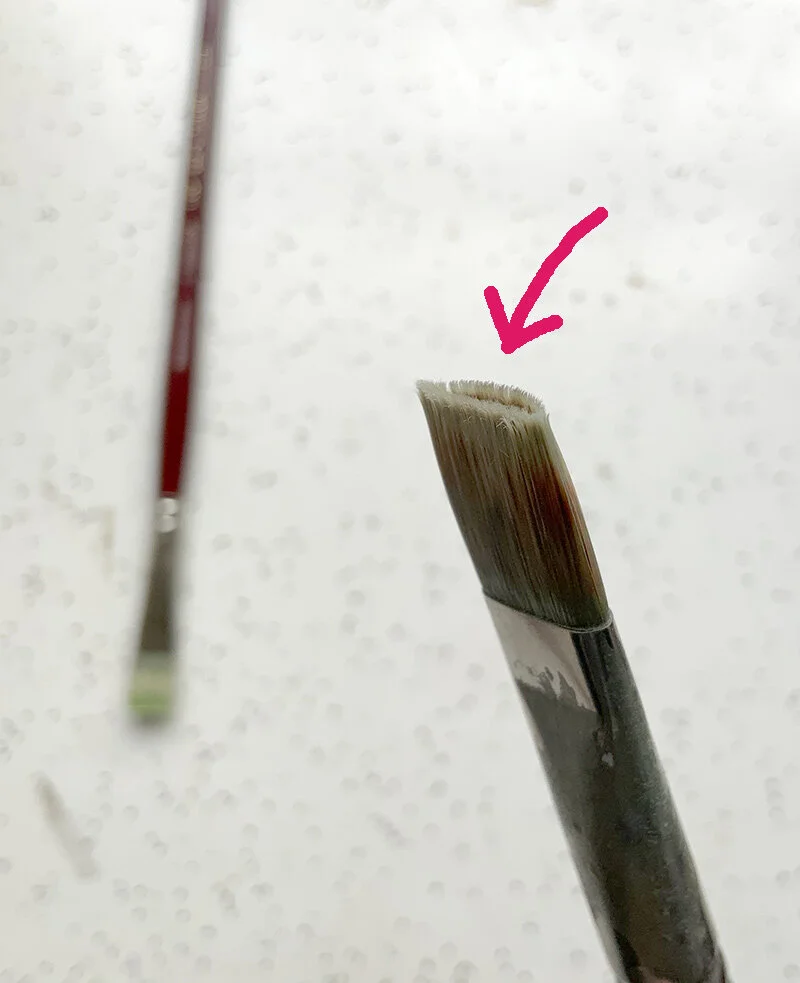
After about six weeks, the fibres get fuzzy and the bristles start parting.
If these Renoir brushes could withstand two weeks of thorough brushwork, they would be vaguely comparable. Any longer, and they would be worth a repeat purchase!
I painted with all the optimism of someone hoping to discover quality and longevity far in excess of any purchase price. Along with a pot of gold at the end of a rainbow, being circled by a flock of flying pigs.
It took only three small paintings with a Renoir brush and much less than a fortnight for the results to be clear:
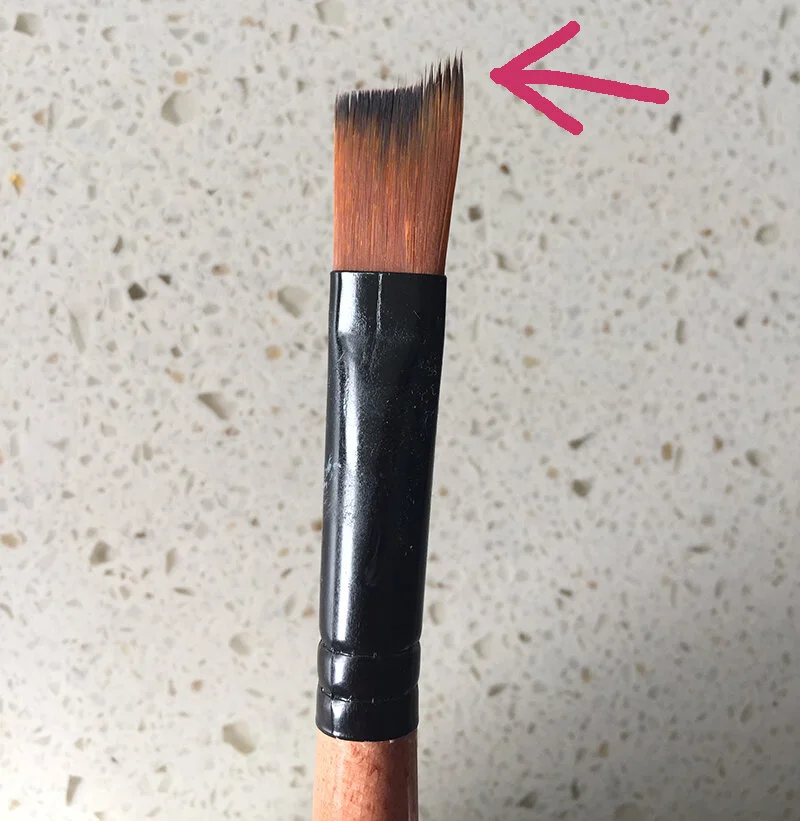
What my hardware store brushes turned into after three paintings.
I was not surprised to discover the occasional bristle stuck to my paint surface at the end of a brush stroke, but what really messed with my sanity were all those indecisive bristles that couldn’t make up their mind about whether to jump ship or stay aboard.
In a previous blog post (which you can read here), I mentioned the effects of worn brush tips on paint strokes. What the Renoir brushes were throwing up made previous brush difficulties pale in comparison.
Long story short:
Do I recommend these brushes for oil painting? Nope.
Will I use the rest of the Renoir brushes I bought? Yes - but not for long (because they won’t last!), and probably just for under-painting.
Will I continue to buy different brushes in the hope of finding that golden zone between quality and affordability? Sure. As long as they don’t affect the overall quality of my paintings, I think it’s okay to do every now and then.
And something else you should know: I’m beginning to think that these weren’t really Renoir’s brushes after all.
Until next time –

POST-PUBLISHING EDIT No. 1 :
As it turns out, the remaining Renoir brushes from Bunnings held up far longer than this first one. So the REAL problem with cheap brushes is the inconsistency of their manufacturing. I suggest: Buy more than you need, and expect to have issues with some, but not all of them. This will still offer cost savings, but will also avoid frustration and disappointment.
POST-PUBLISHING EDIT No. 2 :
These days (2022/23 my preferred brush is the Jacksons brand brushes from the UK art supplier, Jacksons Art Supplies. Reasonably priced, and with a similar life span to the Neef brushes mentioned in this article.